



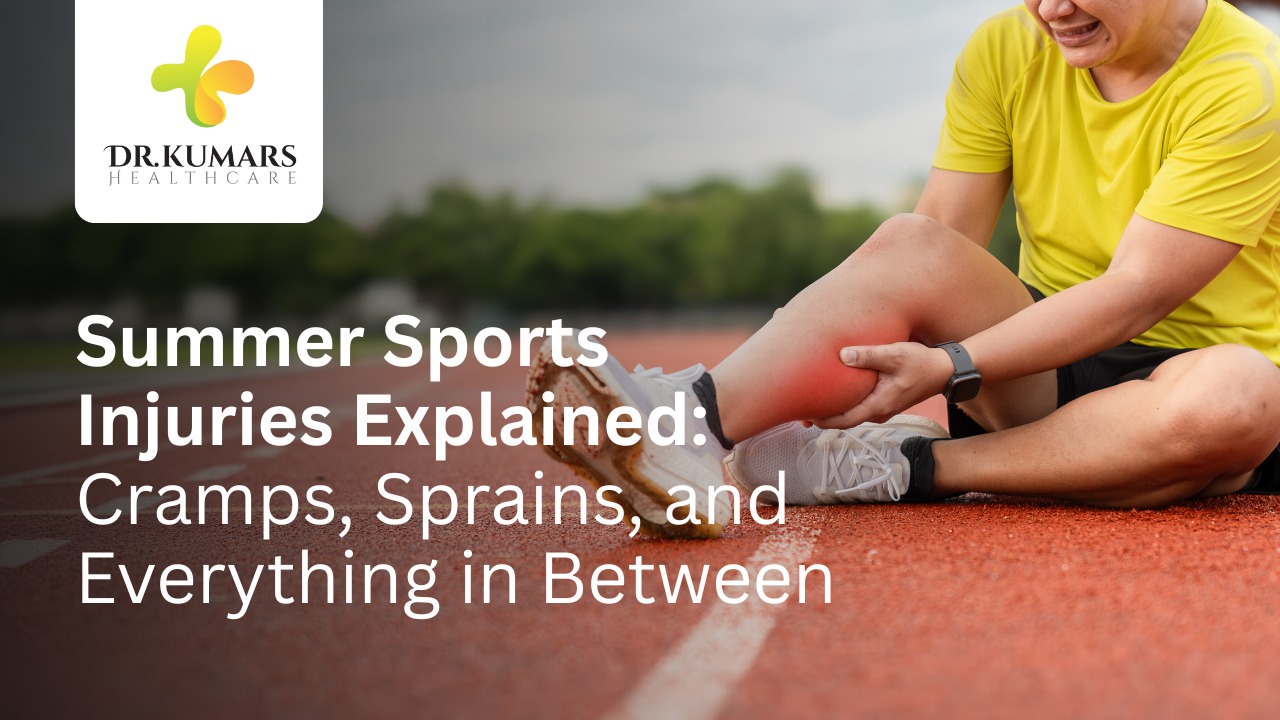
When it comes to summer sports, there is a specific kind of magic; be it the rhythmic bounce of a basketball, the crisp wallop of a tennis ball, or the liberation of a trail run. But with winter behind us, our bodies now face a rude awakening to the high-intensity summer heat of 2026.
Recent data suggests that sports-related injuries have risen sharply by nearly 17% over the last two years. As we push our limits in the heat, the line between a “good burn” and a season-ending injury has become perilously thin. To keep you on the field and out of the clinic, Dr. Kumars Healthcare highlights the most common summer setbacks: cramps, sprains, and everything in between.
Muscle Cramps
We’ve all been there: a sudden, agonizing knot in the calf that feels impossible to release. Traditionally blamed solely on dehydration, 2026 medical insights remind us that Exercise-Associated Muscle Cramps (EAMCs) are far more complex. While electrolyte loss is certainly a factor, neuromuscular fatigue, essentially your nerves misfiring due to exhaustion, is often the true culprit.
- The Remedy: The best fix for an active muscle cramp is to gently stretch the muscle and hold it steady until the pain fades. Then, massage the muscle area softly and move it gradually to restore full mobility again. Sip electrolyte drinks if dehydrated, but keep in mind that this is more helpful for prevention of future cramps rather than stopping the current ones. Some people may get quick relief by tasting sharp flavors like pickle juice or mustard through a nerve reflex that stops the cramp, although evidence is limited.
Sprains and Strains
Often used interchangeably, these two terms represent some of the most common injuries treated during summer sports season. A sprain is an injury to a ligament, the tissue connecting bones, and usually occurs at the ankle or knee after a sudden twist or abrupt change in direction. A strain, commonly referred to as a “pulled muscle,” involves the muscles or tendons themselves.
- The 2026 Protocol: While the traditional R.I.C.E. method (Rest, Ice, Compression, Elevation) remains foundational, modern sports medicine now recommends the P.O.L.I.C.E. framework: Protect, Optimal Loading, Ice, Compression, and Elevation. “Optimal loading” refers to introducing gentle movement early in recovery to prevent joint stiffness and improve circulation.
Overuse and Heat
Summer usually brings out the “Weekend Warrior” in us, making us want to from no exercise all week to a massive weekend hike. This eventually results in Overuse Injuries like shin splints and stress fractures. In addition, with global temperatures rising, heat exhaustion has become a primary “injury” of the season. Dizziness and heavy sweating are no longer signs of a heavy workout; they are warnings from your internal cooling system.
Prevention:
- The 10% Rule: Never increase your intensity, distance, or duration by more than 10% per week.
- Dynamic vs. Static: Save the deep stretches for the game. Before you start, use dynamic movements (lunges, leg swings) to wake up your nervous system.
- Adaptation: Your body typically requires about 7-10 days to adapt to high heat. Always begin with shorter sessions, especially when it is cool in the morning.
Conclusion:
Summer is a great time to be out on the field, not stuck on the sidelines. Pay attention to the heat and address your body’s “quiet” pains before they develop into serious injuries.
Book a consultation at Dr. Kumars Healthcare today: +91 801 501 7011
Frequently Asked Questions
1. Is it better to use heat or ice for a new injury?
For critical injuries during the first 48 hours, ice is generally recommended because it helps numb the pain and brings down the swelling. Heat is better suited for chronic stiffness or muscles that feel “tight” but aren’t swollen.
2. Can I “play through” a minor ankle sprain?
Trying to ignore it then or “walk it off” often triggers a second injury. Stop playing immediately if you’re experiencing instant swelling. Sit down and give your body the rest it needs. Choosing to skip one game can help you stay away from three months in rehab.
3. Why do I get cramps at night after playing sports during the day?
This is a common sign of late-stage fatigue or a significant electrolyte imbalance. Throughout your activity, make sure to manage your magnesium and potassium intake and not just water.
4. Are “compression sleeves” actually helpful?
Yes. They improve “proprioception”; the subconscious ability of your brain to sense where your limb is, which can help prevent you from any clumsy missteps and sustain minor sprains.
5. When should I see a doctor instead of just resting?
This is a no-brainer: seek professional help immediately if you hear a “pop” and notice any significant deformity, experience numbness, or if there’s no improvement in your pain even after three days of home care. Modern diagnostic imaging like portable ultrasound has made it easier than ever to identify any tears in their earliest stages.